← Every fish

0 guides · 0 waters

Northern pike fishing guides

The long, toothy predator that lives in nearly every northern lake and river, and the one most likely to hit a lure meant for something else. A pike trip is casting weed edges with big baits, and the strike is the point.

About northern pike

Northern pike

Esox lucius

How to know it

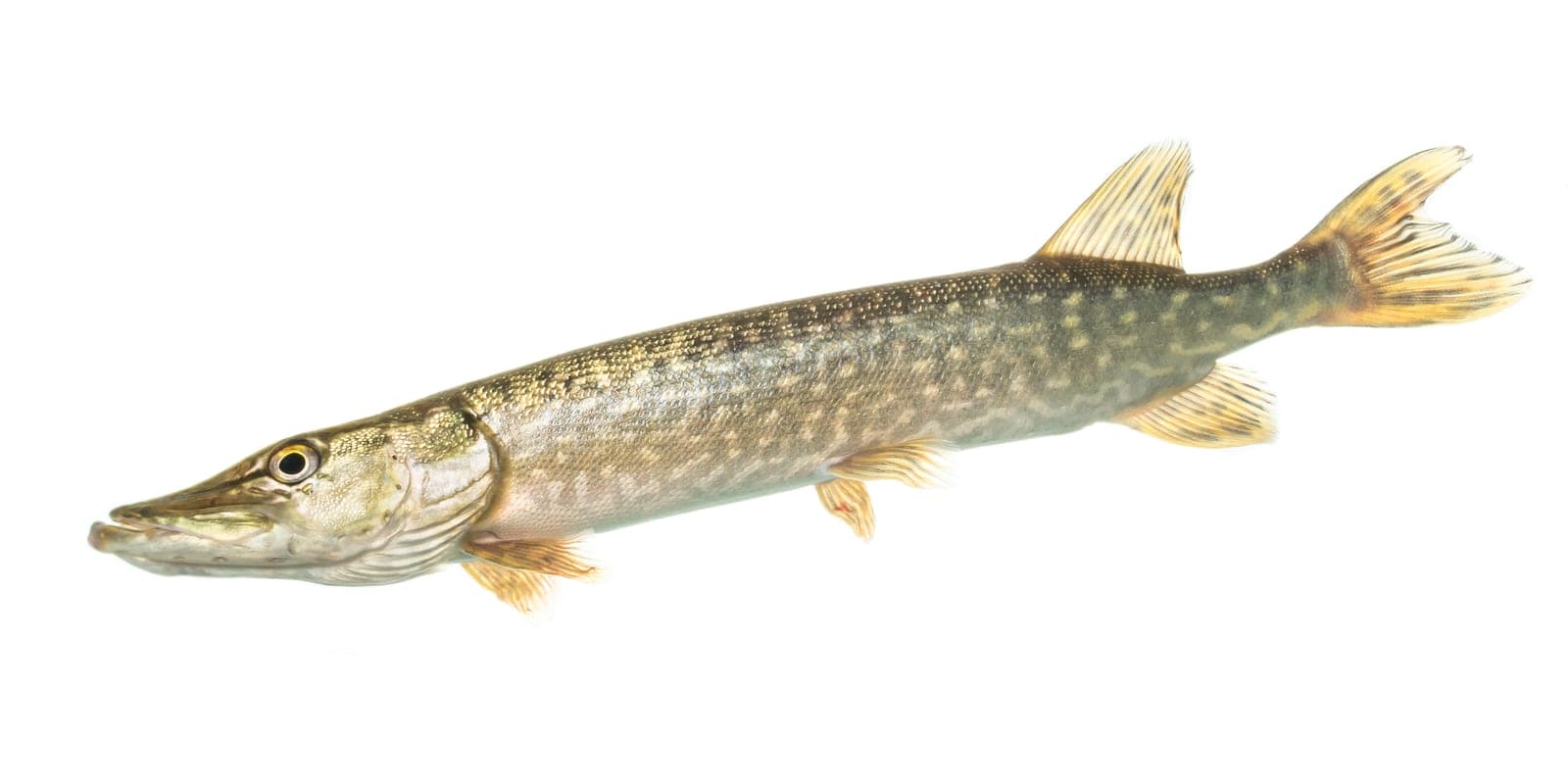
A pike is a musky-shaped fish — long, flat duckbill head, dorsal fin set far back — but the markings run the other way: light, bean-shaped spots on a dark green ground. The tail fin is rounded at the tips. There are five or fewer pores on each side under the lower jaw, and the cheek is fully scaled, where a musky's has scales only on the top half. A pike's teeth are what people remember.

Where it lives

Pike are native across the northern hemisphere and live in almost every lake, flowage, river and backwater in the Upper Midwest that has weeds. They are ambush fish: they sit in or beside cover — weed beds, reed edges, fallen wood, the mouths of creeks — and hit what passes. Small pike are everywhere; big pike want cooler water with large forage, and in summer on deep lakes they move out to deeper weeds and rock or suspend near schools of ciscoes.

Through the year

Pike spawn very early, right at ice-out, in flooded marsh and shallow bays, and are the first fish to move shallow in spring. The early open-water season is fishing warm bays and the first weeds to come up. As the water warms the bigger fish leave the shallows for deep weed edges and cooler water, and summer fishing for size means fishing deeper and faster. Fall cools the shallows again and brings big fish back in to feed before ice. Pike are a mainstay of ice fishing across the region, taken on tip-ups with live or dead bait set along weed edges.

How guides fish for it

Casting big, bright lures along the edge of cover: spoons, spinnerbaits, large inline spinners, jerkbaits and soft plastics. On a slow day a pike guide may switch to live bait under a float. Fly fishing for pike with large streamers on a heavy rod is well established on clear northern waters, and some guides specialize in it. Trolling covers water on big lakes in summer. In winter, tip-ups. A pike will often hit a lure meant for walleye or bass, so many guides carry a wire leader and a pike net on any trip.

Handling and release

The teeth are sharp and the gill rakers are worse, so a pike is held with a hand under the gill plate from behind, never in the gills, or with a glove across the back. Long pliers or jaw spreaders get the hooks out. Many anglers release pike over a certain size; the states' rules often encourage keeping small ones and letting big ones go, because the big ones are what makes a lake worth fishing.

Rules

Bag limits, length and slot limits and seasons vary by state and by water, and several states have zone rules meant to thin out small pike. The Minnesota DNR and the Wisconsin DNR publish the current rules, and a guide will know the ones for the water you are on.

A northern pike, side on, with its light bean-shaped spots
USFWS Mountain-Prairie Region, Public domain

At a glance

Scientific name
Esox lucius
Family
Pike
Also called
Northern, Pike, Jack, Hammer handle, Gator
Size
Most run 18 to 28 inches. A fish over 40 inches is a trophy in the Upper Midwest.
Season
Open year round in many states and waters, with a spring closed season on some. Spring and fall are the strong bites; the biggest fish are caught in cold water, open or frozen.

Guides who fish for northern pike

No guide has listed northern pike yet. If you guide for them, set up your service, add your waters and tick the fish.
Set up your service

Other fish with a guide

Every fish

How a trip gets booked

Pick your days

Specific days, a whole month, or any time. The day isn’t reserved yet.

The guide answers

They confirm a day, or tell you straight that it won’t work.

You’re booked

Nothing is charged until they confirm. Then your trip page has where to meet, when to be there and what to bring.