← Every fish

0 guides · 0 waters

Salmon fishing guides

The Pacific salmon of the Great Lakes — chinook and coho stocked since the 1960s, now the backbone of the charter fleet on Lake Michigan and part of Superior's fishing. A salmon trip is a big boat, downriggers, deep cold water and a fish that takes line.

About salmon

Salmon

Oncorhynchus tshawytscha (chinook), Oncorhynchus kisutch (coho), Salmo salar (Atlantic)

How to know it

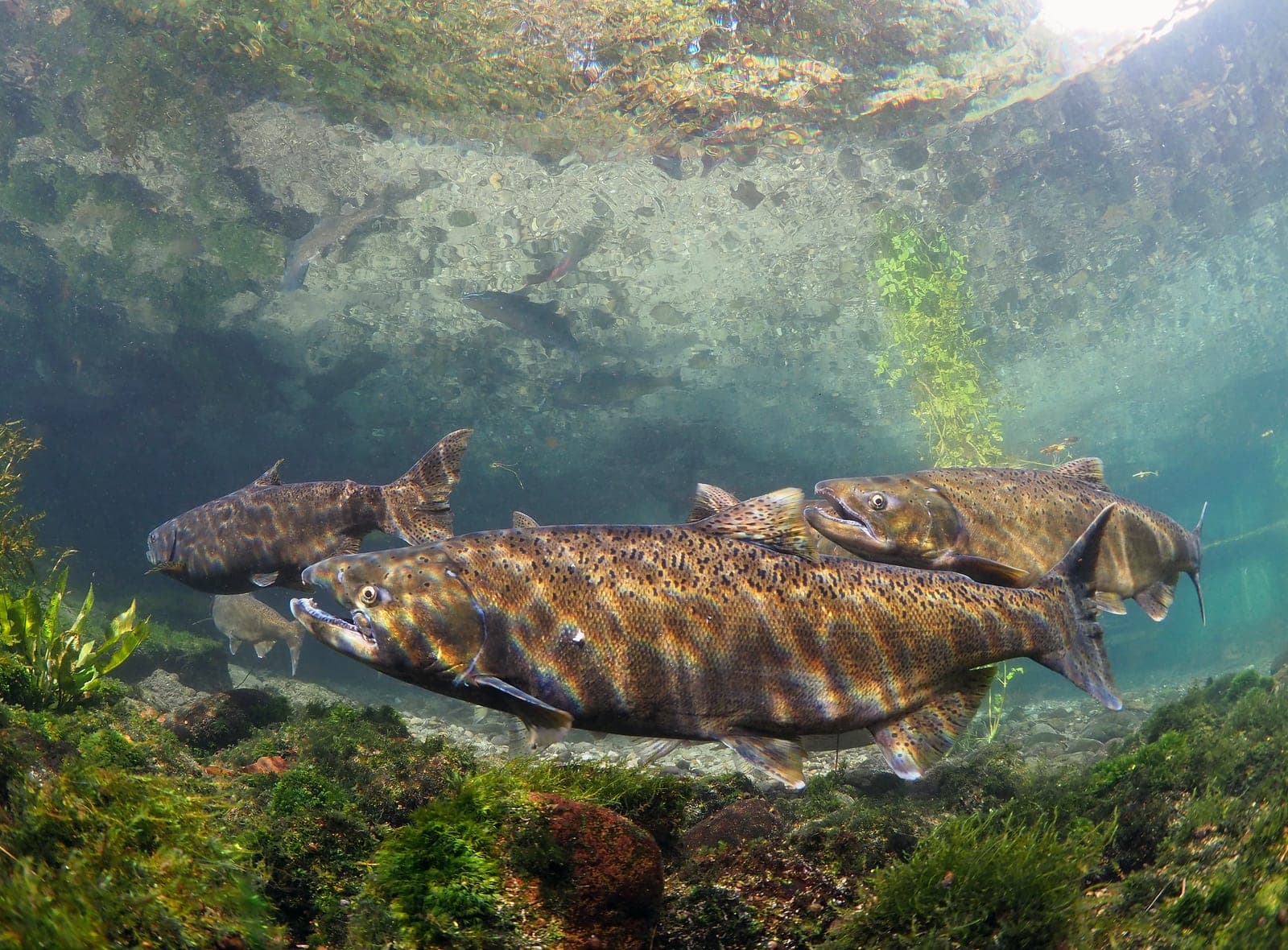
A chinook, the king, is the big one: silver with black spots on the back and over the whole tail, black gums at the base of the teeth, and a deep body. A coho is smaller and brighter, with spots only on the upper half of the tail and white gums. Both darken toward the spawn — chinook to olive and black, coho to red with a hooked jaw on the male. Atlantic salmon, stocked in a few places, have no spots on the tail and look like a large brown trout; pink salmon, small and humpbacked in the fall, run some Lake Superior streams. Steelhead are told from all of these by the pink stripe and the fully spotted tail.

Where it lives

The Great Lakes. Chinook and coho were stocked in the 1960s to control alewives and became a fishery; today they are stocked and, in some rivers, reproduce on their own. Lake Michigan holds the most, with the Wisconsin and Michigan shores both fishing well; Lake Superior has a smaller population, and Huron's has changed with its forage. In the open lake, salmon follow the baitfish and the temperature, which can put them two miles out or at the pier head depending on the week. In late summer they gather off the river mouths they came from, and in fall they run up those rivers to spawn and die.

Through the year

Spring puts coho and some chinook near shore in the warmer water, catchable from small boats and even from piers. Through summer the fish move offshore and deep, and the fishing is trolling at the thermocline, often fifty to a hundred feet down. From August the mature chinook stage off the harbors and river mouths, and the biggest fish of the year are caught then; by September and October they are in the rivers, where they can be fished with care until they spawn. A chinook lives about four years, a coho about three, and each fish runs once.

How guides fish for it

Trolling, from a boat built for it. Spoons, plugs and flasher-and-fly rigs are set at different depths off downriggers, dipsy divers and lead core or copper line, spread with planer boards, and the guide adjusts the spread all morning to find the depth and the color the fish want. A salmon charter runs early, often from first light, and comes in when the limit is met or the lake comes up. In the rivers in fall a guide may drift spawn or flies through the holding pools, which is a different day and a different kind of fishing.

Handling and release

Salmon are mostly kept — a Great Lakes salmon is good eating when fresh from the lake — and the guide will usually clean them at the dock. Fish released in the open lake swim off well; fish in the river in fall are near the end of their lives and are often released as a courtesy to the run.

Rules

Great Lakes bag and length limits, and the river rules in fall, are set by each state and by the lake. The Wisconsin DNR and the Minnesota DNR publish them, and a guide will know the ones for the water you are on. A Great Lakes trout and salmon stamp is required in several states on top of the license.

Chinook salmon returning from the Pacific, underwater
USFWS Pacific Region, CC0

At a glance

Scientific name
Oncorhynchus tshawytscha (chinook), Oncorhynchus kisutch (coho), Salmo salar (Atlantic)
Family
Salmon and trout
Also called
King (chinook), Silver (coho), Atlantic, Pink
Size
Coho commonly run 3 to 8 pounds, chinook 10 to 20 pounds, with larger fish every year.
Season
Open water from spring through fall on the Great Lakes. Spring near shore, summer offshore, and the late-summer staging and fall run into the rivers.

Guides who fish for salmon

No guide has listed salmon yet. If you guide for them, set up your service, add your waters and tick the fish.

Set up your service

Other fish with a guide

Every fish

How a trip gets booked

Pick your days

Specific days, a whole month, or any time. The day isn’t reserved yet.

The guide answers

They confirm a day, or tell you straight that it won’t work.

You’re booked

Nothing is charged until they confirm. Then your trip page has where to meet, when to be there and what to bring.