← Every fish

0 guides · 0 waters

Brown trout fishing guides

The wary, hard-to-fool trout of the spring creeks and limestone streams, and a lake-run fish in the Great Lakes. A brown trout trip is a day of reading water, careful casts and fish that reward getting it right.

About brown trout

Brown trout

Salmo trutta

  • A brown trout caught on the Driftless Area National Wildlife Refuge
    A brown trout caught on the Driftless Area National Wildlife Refuge — USFWS Midwest Region, Public domain

How to know it

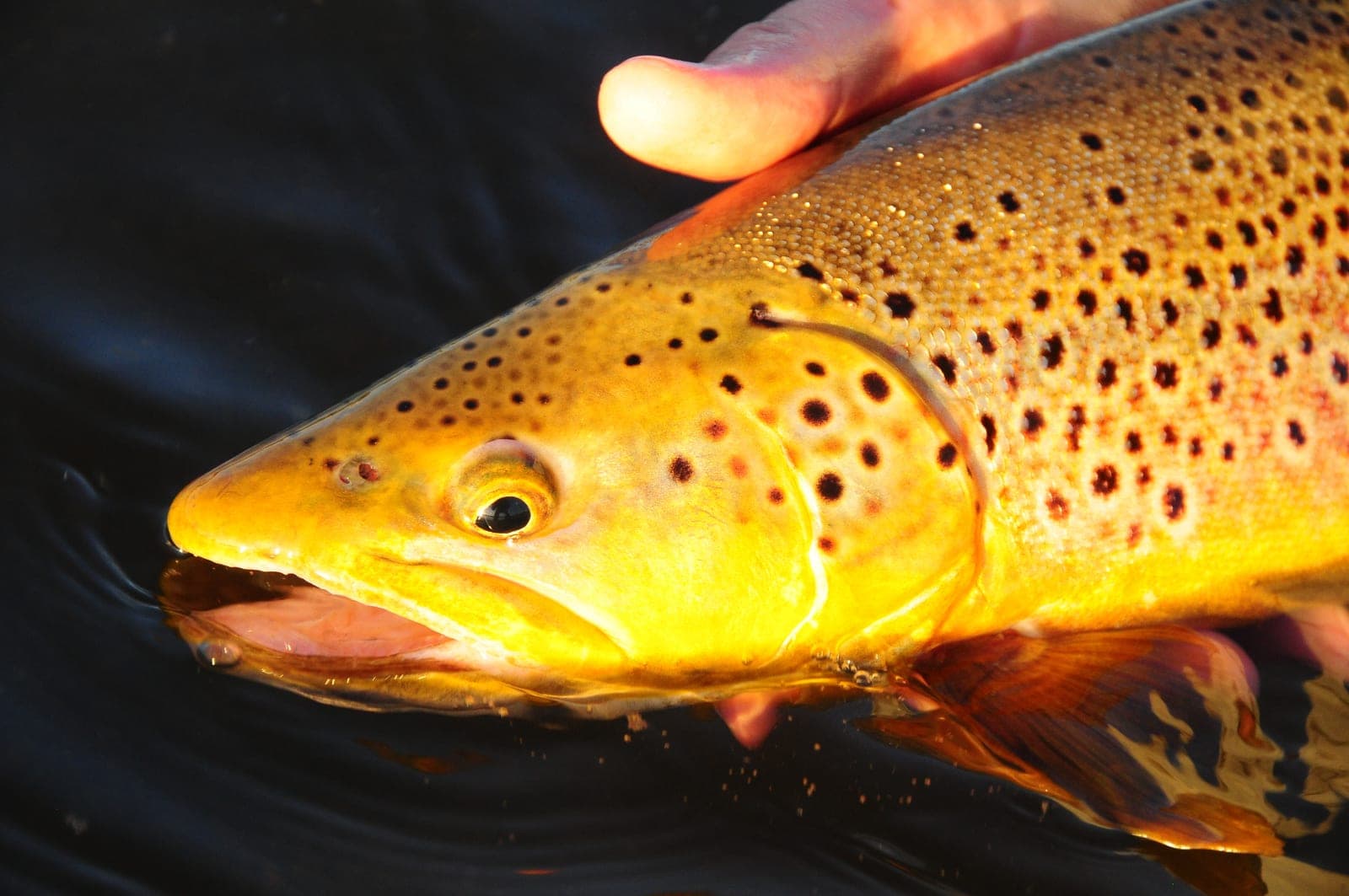
A brown trout is golden brown with black spots and a scattering of red or orange spots, often ringed in pale blue, along the sides. The tail has few or no spots, and the adipose fin is often edged in orange. Lake-run browns go silver and lose much of the color. A brook trout has light spots on a dark ground and a square tail; a rainbow has a pink stripe and a fully spotted tail.

Where it lives

Brown trout came from Europe in the 1880s and are now the main trout of the Driftless Area — the limestone spring creeks of southwest Wisconsin, southeast Minnesota and northeast Iowa, where cold groundwater keeps the streams fishable all season. They also live in the larger rivers of the north and in the Great Lakes, where a stocked and naturalized population runs the shorelines and the river mouths. In a stream a brown wants cover: an undercut bank, a log, a deep bend pool, and it feeds in the current seam beside it.

Through the year

Stream browns feed through the spring hatches — midges and blue-winged olives early, then caddis, sulphurs and the larger mayflies into June — and in summer, when the water is low and clear, they feed early, late and on terrestrials that fall from the banks. Fall is the spawn, and the states close most streams for it; the fish turn dark, pair up on gravel and should be left alone. On the Great Lakes, browns come in close to shore and into the river mouths in spring and again in fall, and are caught by trolling and casting from piers and boats.

How guides fish for it

Fly fishing, mostly, on the spring creeks: dry flies when fish are rising, nymphs under an indicator when they are not, and streamers for the big fish on a dark day. The guide's work is in reading the water, choosing the fly, and getting an angler into position for a short, quiet cast to a fish that spooks at the sight of a shadow. Spin fishing with small spinners and plugs works too, and some guides offer both. On the big lakes a brown trout trip is trolling with planer boards along the shore in spring, or casting from a boat near a river mouth in the fall.

Handling and release

Browns are released on most guided trips. They are handled wet, kept in the water in the net while the hook comes out, and lifted briefly if at all. Barbless hooks are the norm. Where the regulations allow it a guide may keep a fish from a stream with plenty of them.

Rules

Trout stream rules are the most detailed in any state's book: seasons, catch-and-release periods, gear restrictions and bag limits that differ stream by stream. The Wisconsin DNR and the Minnesota DNR publish them, and a guide will know the ones for the water you are on.

A brown trout held in the water before release, Seedskadee National Wildlife Refuge
USFWS Mountain-Prairie Region, Public domain

At a glance

Scientific name
Salmo trutta
Family
Salmon and trout
Also called
Brown, German brown, Loch Leven
Size
Stream fish mostly run 8 to 16 inches, and a fish over 20 inches is a big one. Lake-run browns in the Great Lakes grow far larger.
Season
Stream seasons open in spring and close in fall, with an early catch-and-release period in some states. Lake-run fish are caught near shore in spring and fall.

Guides who fish for brown trout

No guide has listed brown trout yet. If you guide for them, set up your service, add your waters and tick the fish.
Set up your service

Other fish with a guide

Every fish

How a trip gets booked

Pick your days

Specific days, a whole month, or any time. The day isn’t reserved yet.

The guide answers

They confirm a day, or tell you straight that it won’t work.

You’re booked

Nothing is charged until they confirm. Then your trip page has where to meet, when to be there and what to bring.