← Every fish

0 guides · 0 waters

Lake trout fishing guides

The big, slow-growing char of deep cold lakes — Superior, the deep inland lakes of the north and the Boundary Waters. A lake trout trip is deep water, big lures and a fish that may be older than the angler.

About lake trout

Lake trout

Salvelinus namaycush

How to know it

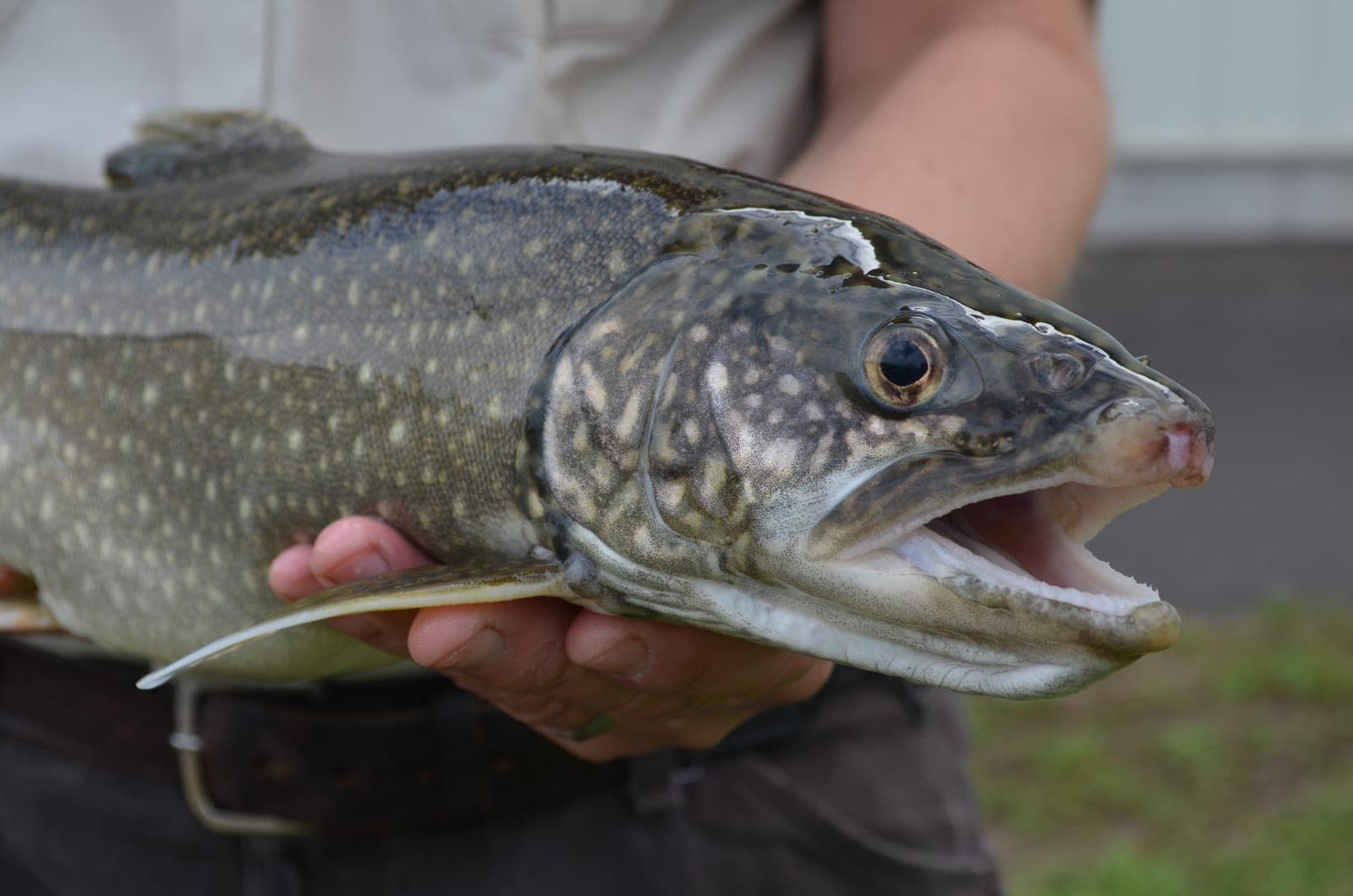
A lake trout is grey to green with light spots over the whole body, a deeply forked tail and a white leading edge on the lower fins. It is a char, like the brook trout, so the spots are light on a dark ground, never dark on light as on a brown or rainbow. The forked tail separates it from a brook trout, whose tail is square. Splake, the lake trout-brook trout cross stocked in some waters, falls between the two and is told apart with difficulty.

Where it lives

Lake trout want cold, clear, well-oxygenated water, and in the Upper Midwest that means Lake Superior, the northern parts of Lake Michigan and Huron, and the deep inland lakes of northern Minnesota, Wisconsin and Michigan — the Boundary Waters and the big lakes near the Canadian border especially. In summer they live below the thermocline, often deeper than a hundred feet, over rock reefs and the deep basin. In spring and fall, when the whole lake is cold, they come up and can be caught in shallow water.

Through the year

Right after ice-out, lake trout are shallow and reachable with a cast — the best few weeks of the year for an angler without downriggers. As the surface warms they go down, and summer fishing is deep: trolling with downriggers or wire line, or vertical jigging over reefs found with electronics. In fall they spawn on rocky reefs and shoals, usually in the dark, and some states close inland lakes to protect them. Winter brings them back within reach, and ice fishing for lakers — jigging big spoons and tube jigs in deep water — is a tradition on the inland lakes.

How guides fish for it

On Lake Superior, trolling: spoons and plugs behind downriggers and dipsy divers along structure, often miles from the ramp, on a boat built for big water. On inland lakes in spring, casting spoons and jerkbaits from a boat or shore; in summer, vertical jigging heavy tubes and spoons over deep rock; in winter, the same jigging through the ice, with the guide's shelter and electronics doing most of the work. A lake trout guide knows the deep structure and the thermocline, and reads the weather, because big water closes quickly.

Handling and release

A lake trout brought up from deep water may have an expanded swim bladder and need a careful release — a guide will know how. Fish caught shallow in spring and winter release well. Lake trout are also one of the best-eating fish on the list, especially the smaller ones, and many trips keep a fish.

Rules

Seasons, bag and length limits vary by state and by water, and Lake Superior has its own, including rules on Canadian waters. The Minnesota DNR and the Wisconsin DNR publish the current rules, and a guide will know the ones for the water you are on.

A lake trout held at a hatchery, with its light spots and forked tail
USFWS Midwest Region, Public domain

At a glance

Scientific name
Salvelinus namaycush
Family
Salmon and trout
Also called
Laker, Mackinaw, Grey trout, Togue
Size
Most run 18 to 28 inches. A fish over 36 inches is a trophy, and Lake Superior grows fish much larger.
Season
Open-water fishing from ice-out into fall on most waters, with a closed period on some inland lakes in fall when they spawn. Ice fishing is a large part of the season on inland lakes.

Guides who fish for lake trout

No guide has listed lake trout yet. If you guide for them, set up your service, add your waters and tick the fish.
Set up your service

Other fish with a guide

Every fish

How a trip gets booked

Pick your days

Specific days, a whole month, or any time. The day isn’t reserved yet.

The guide answers

They confirm a day, or tell you straight that it won’t work.

You’re booked

Nothing is charged until they confirm. Then your trip page has where to meet, when to be there and what to bring.