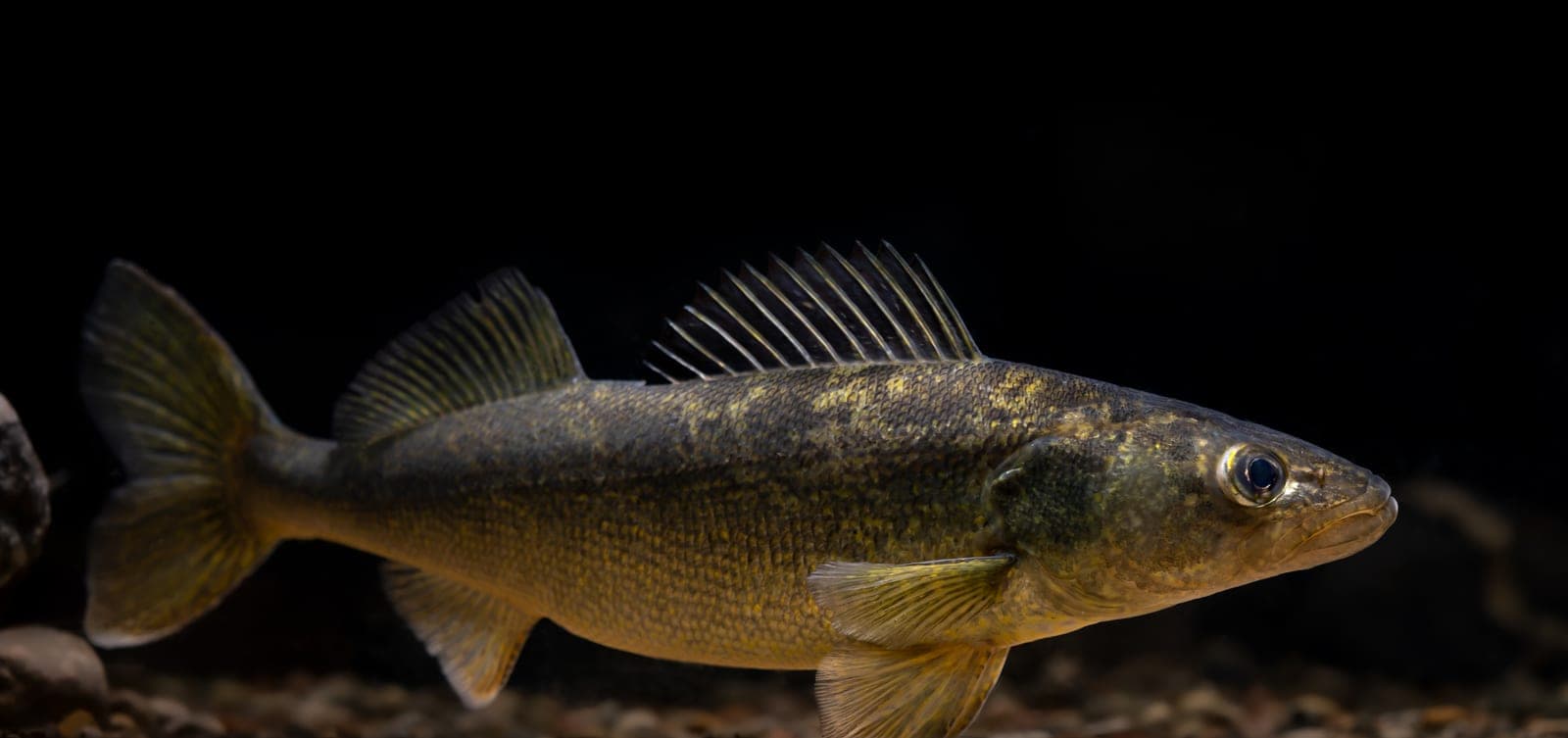
How to know it
A walleye is a long, olive-gold fish with a large glassy eye — the layer behind the retina reflects light, which is what lets the fish feed in the dark and what gives it the name. The mouth is full of sharp teeth, the two dorsal fins are separate, and the lower tip of the tail fin is white. That white tip is the quickest way to tell a walleye from its smaller cousin the sauger, which has dark blotches on its sides and spots on its spiny dorsal fin.
Where it lives
Walleye are native across the Great Lakes region, the upper Mississippi and much of Canada, and are stocked widely beyond that. They are a fish of larger lakes and rivers with some current, rock or gravel to spawn on, and enough room to roam. In a lake they hold on structure — rock bars, sand points, the edges of weed flats, humps in open water — and move with the light and the forage. In a river they sit below dams, at the heads of pools and along current seams. Large, windy, slightly stained lakes are classic walleye water, and so are rivers like the Mississippi, the Wisconsin and the Wolf.
Through the year
Walleye spawn in early spring, right after ice-out, on rock and gravel in rivers and along windblown lake shores; most states close the season until the spawn is done. The spring opener finds them shallow, hungry and close to where they spawned. By early summer they slide to deeper structure and feed at dawn, dusk and night, or all day when the wind puts a chop on the water. In fall they move back up and feed hard, and some of the biggest fish of the year are caught in cold water in November. Under the ice they are caught on the same structure, often at the same low-light hours.
How guides fish for it
Slowly, near the bottom. The classic methods are a jig tipped with a minnow, leech or crawler, worked along a break; a live-bait rig dragged behind the boat; a slip bobber over a spot; and in summer, trolling crankbaits or spinner rigs along a contour. On rivers it is vertical jigging in current. A walleye guide spends the day reading the electronics, holding the boat on a precise line in the wind and feeling for a bite that is often just a weight on the line. The guide also sets the pace of the day around the light: an early start, a long midday on deeper water, and a stay into the evening if that is when the fish are feeding.
Walleye are the fish most anglers keep, and a shore lunch or a bag to take home is often part of the trip. Ask the guide what their practice is.
Handling and release
The teeth are sharp and the gill plates have an edge, so a walleye is held across the back behind the head or with a hand under the belly. Fish pulled from deep water in summer may not survive release, which is one reason guides keep what the rules allow from deep and release the shallow ones.
Rules
Bag limits, length limits and slots vary by state and by water, and some lakes have their own rules; the opener date is set each year. The Minnesota DNR and the Wisconsin DNR publish the current rules, and a guide will know the ones for the water you are on.
 Driftwell GuidingOut of Cable, WisconsinAllen Lake, Basswood Lake, Chequamegon Bay, Flynn Lake, Lac Courte Oreilles, Middle River, Namekagon Lake, Namekagon River, Turtle Flambeau Flowage