← Every fish

0 guides · 0 waters

Largemouth bass fishing guides

The green bass of weeds, wood and warm water, and the most-fished-for fish in the country. In the north it lives in the shallow, weedy lakes and backwaters, and a largemouth trip is casting into cover and setting the hook hard.

About largemouth bass

Largemouth bass

Micropterus salmoides

How to know it

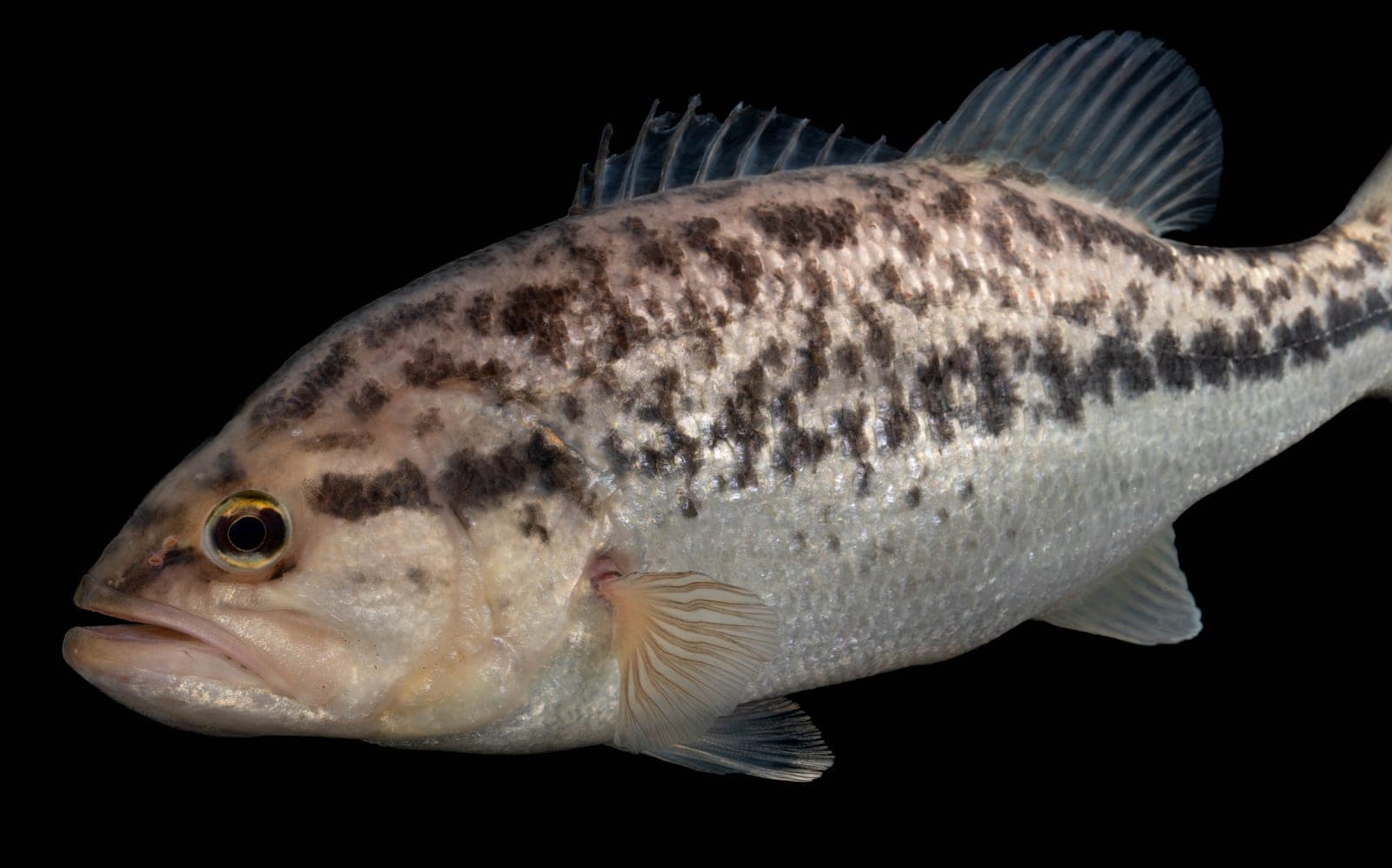
A largemouth is green on the back fading to a white belly, with a dark, broken stripe down the side. The mouth is the tell: with the jaw closed, its hinge reaches back past the eye. The two dorsal fins are nearly separated by a deep notch. A smallmouth, by contrast, has a jaw that stops under the eye, vertical bars rather than a stripe, and a bronze cast.

Where it lives

Largemouth are native to the eastern and central United States and have been moved nearly everywhere. They want warm, slow water with cover: weed beds, lily pads, docks, fallen trees, brush and bulrushes. In the Upper Midwest that means shallow natural lakes, flowages and reservoirs, the backwaters and sloughs of big rivers, and the weedy bays of deeper lakes. They are rarely far from something to hide beside.

Through the year

Largemouth spawn in late spring when the shallows warm into the sixties, the male building a nest in a protected bay and guarding it; many states close the season or require release through this period. After the spawn the fish push into the thickest cover of the summer — pads, matted weeds, docks — and the fishing is close-quarters work in the heat of the day as much as in the morning. In early fall they feed heavily on the outside weed edges as the water cools, and then go deep and quiet for the winter. They are caught through the ice in some lakes but few guides target them then.

How guides fish for it

Casting into cover. The baits are soft plastics — worms, creature baits, tubes — pitched into pockets in the weeds; jigs flipped under docks; spinnerbaits and chatterbaits along weed edges; frogs over matted weeds; and topwaters at first light. Tackle is heavier than for smallmouth because the fish has to be pulled out of what it is in. A largemouth guide reads the cover and the sun — which bank, which weed, which dock the fish are using today — and the trip is a steady series of short, accurate casts. Some guides run largemouth and smallmouth on the same day where the water has both.

Handling and release

Hold a largemouth by the lower jaw, keep it level, and do not bend the jaw back on a big fish. Most are released. In warm water, keep the handling short.

Rules

Seasons, catch-and-release periods and length limits vary by state and by water. The Wisconsin DNR and the Minnesota DNR publish the current rules, and a guide will know the ones for the water you are on.

A largemouth bass, side on, with the dark stripe down its side
USFWS Mountain-Prairie Region, Public domain

At a glance

Scientific name
Micropterus salmoides
Family
Sunfish
Also called
Bucketmouth, Green bass, Black bass
Size
Most run 12 to 18 inches in northern waters. A fish over 20 inches is a trophy this far north.
Season
Late spring through fall, with a spring closed or catch-and-release period on many waters. Early summer and early fall are the strong bites.

Guides who fish for largemouth bass

No guide has listed largemouth bass yet. If you guide for them, set up your service, add your waters and tick the fish.

Set up your service

Other fish with a guide

Every fish

How a trip gets booked

Pick your days

Specific days, a whole month, or any time. The day isn’t reserved yet.

The guide answers

They confirm a day, or tell you straight that it won’t work.

You’re booked

Nothing is charged until they confirm. Then your trip page has where to meet, when to be there and what to bring.