← Every fish

0 guides · 0 waters

Lake sturgeon fishing guides

The oldest and largest fish in the region, a bottom-feeding relic that can live past a hundred years. Nearly all sturgeon fishing is catch and release on big rivers, and a sturgeon trip is heavy gear, patience and a fish you will remember.

About lake sturgeon

Lake sturgeon

Acipenser fulvescens

How to know it

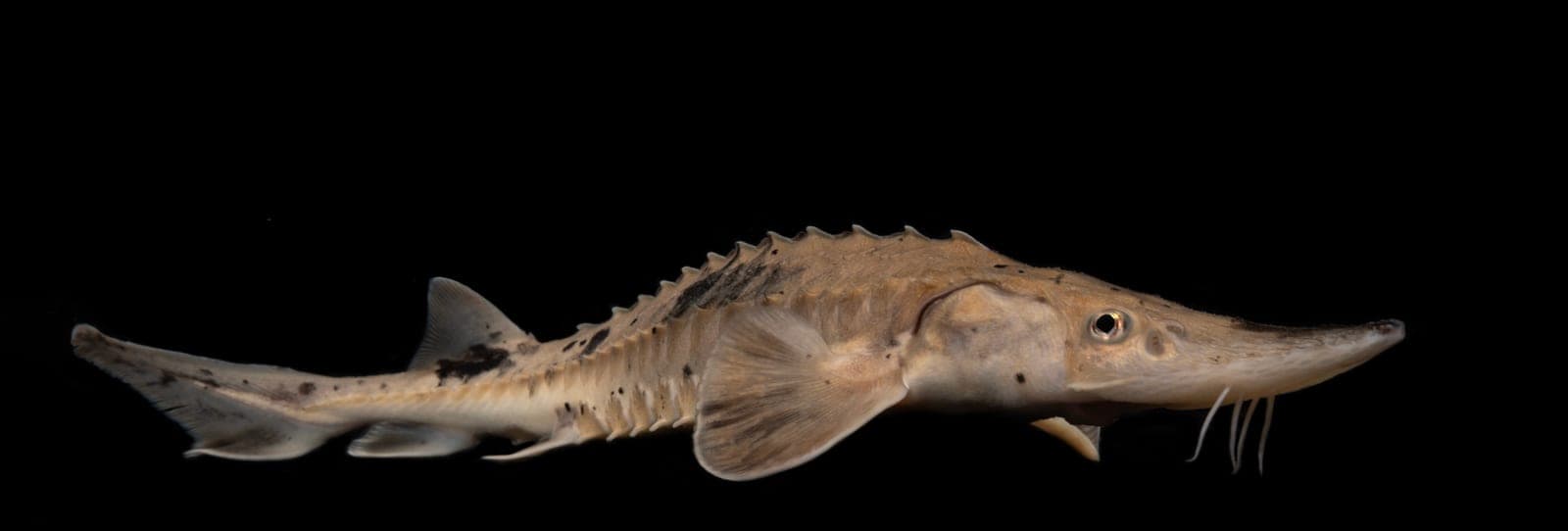
A lake sturgeon cannot be mistaken for anything else: a long, grey-brown fish with rows of bony plates instead of scales, a shark-like tail with the upper lobe longer, a pointed snout with four barbels in front of a toothless, tube-shaped mouth on the underside of the head. It feeds by feel, vacuuming insects, snails, crayfish and small fish off the bottom. Shovelnose sturgeon, a much smaller river fish of the Mississippi, has a flatter snout and a thin filament on its tail.

Where it lives

Lake sturgeon live in the big rivers and lakes of the region: the Wolf and Fox rivers and Lake Winnebago, the St. Croix, the Rainy River and Lake of the Woods, the Menominee, the Mississippi, the St. Louis River, and the Great Lakes themselves. They were nearly wiped out a century ago by harvest and dams and have been recovering slowly under protection; a fish takes twenty years or more to spawn for the first time, and a female spawns only every few years. Most of the time they are on the bottom of deep holes and channels.

Through the year

Sturgeon spawn in spring on rocky shorelines and below dams, and on the Wolf River the spawning run can be watched from the bank, which is one of the region's natural events. The hook-and-line seasons are set around this: a fall season on some rivers when the fish gather in the deep holes, and a spring season on others. Through summer the fish are on the bottom in deep water and are not much fished. The February spearing season on Lake Winnebago, through the ice, is a tradition more than a century old, managed with a cap and a count every day.

How guides fish for it

Anchored on a deep hole with heavy gear: a stout rod, braided line, a heavy sinker and a gob of crawlers on a single hook, set on the bottom and waited on. The take is a slow pull, the fight is long, and a big fish is brought alongside, measured, photographed in the water and released. On the Rainy River and the St. Croix the spring and fall catch-and-release fishing is the kind of trip anglers travel for. A sturgeon guide knows the holes, the rules — which are strict and specific — and how to handle a hundred-pound fish without hurting it.

Handling and release

A sturgeon is kept in the water. It is not lifted by the gills or the tail, it is not laid on the deck of a boat, and the photo is taken with the fish supported in the water alongside. The states publish handling rules and most guides go further than they require. Harvest, where it exists, is by tag and is a once-a-season event.

Rules

Sturgeon rules are the most specific of any fish in the region — seasons by river, catch-and-release stretches, tags, registration and gear rules. The Wisconsin DNR and the Minnesota DNR publish them, and a guide will know the ones for the water you are on.

A juvenile lake sturgeon, side on, with its rows of bony plates
USFWS Mountain-Prairie Region, Public domain

At a glance

Scientific name
Acipenser fulvescens
Family
Sturgeon
Also called
Sturgeon, Rock sturgeon
Size
Adults commonly run 3 to 5 feet. Fish over 6 feet and 100 pounds exist in the Winnebago system, the St. Croix and the Rainy River.
Season
Catch-and-release hook-and-line seasons run in fall and spring on a few rivers, with harvest limited to a handful of waters and a lottery or tag in some. The Winnebago spearing season is its own tradition.

Guides who fish for lake sturgeon

No guide has listed lake sturgeon yet. If you guide for them, set up your service, add your waters and tick the fish.
Set up your service

Other fish with a guide

Every fish

How a trip gets booked

Pick your days

Specific days, a whole month, or any time. The day isn’t reserved yet.

The guide answers

They confirm a day, or tell you straight that it won’t work.

You’re booked

Nothing is charged until they confirm. Then your trip page has where to meet, when to be there and what to bring.