← Every fish

0 guides · 0 waters

Crappie fishing guides

The panfish that schools, suspends and bites softly on a small jig or minnow. A crappie trip is finding the school — in spring brush, over summer weeds, or under the ice — and then catching a lot of them.

About crappie

Crappie

Pomoxis nigromaculatus and Pomoxis annularis

How to know it

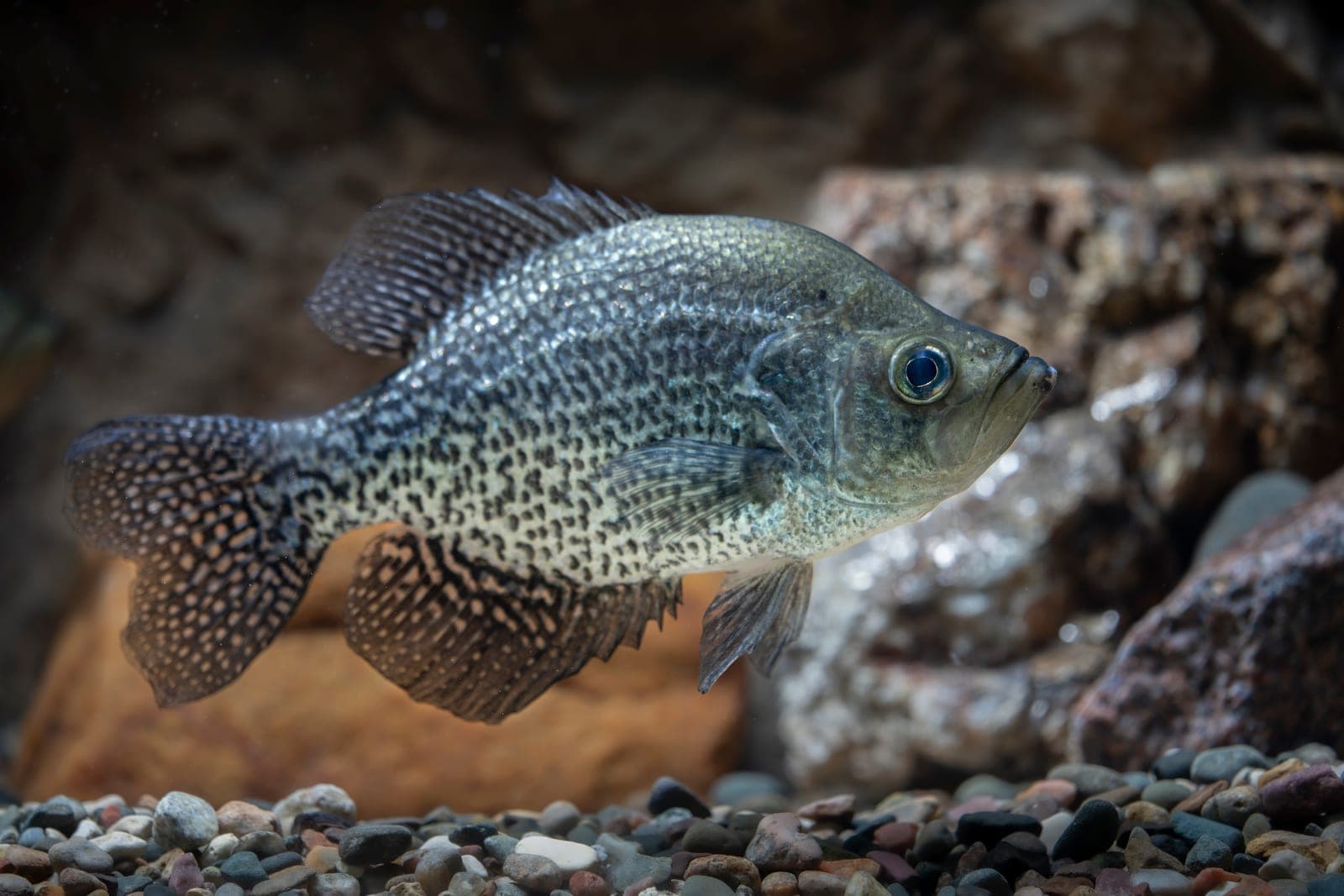
Two fish go by the name. The black crappie, the common one in the north, is silver-green and speckled with black over the whole body, and has seven or eight spines in its dorsal fin. The white crappie, more common in the southern parts of the region and in rivers and reservoirs, is paler with its dark marks arranged in vertical bars, and has five or six dorsal spines. Both are deep-bodied, flat-sided fish with a large mouth for a panfish and a thin, tearing membrane around the jaw — the papermouth — that makes a hard hookset a mistake.

Where it lives

Crappie live in lakes, flowages, reservoirs and the slow backwaters of rivers across the region. They want cover and are rarely far from it: flooded brush and timber, cribs, bulrushes, docks, deep weed edges. Unlike bluegill they often hold off the bottom, suspended at a particular depth over deep water in summer and winter, which is why finding them is the whole game.

Through the year

In spring, as the water warms into the fifties and sixties, crappie move into shallow bays and along brushy shorelines to spawn, and for a few weeks they are shallow and easy. After the spawn they slide out to the first deep weed edge or to brush in deeper water, and from early summer on they suspend — hanging over the basin, often in open water, moving with the plankton and the small minnows they feed on. Fall gathers them in large schools on deep edges, and under the ice they hold in the same basins, often biting best at dusk.

How guides fish for it

Small and light. A small jig — a marabou or plastic body on a light head — under a slip bobber or cast and swum slowly, or a crappie minnow on a light hook under a float. In summer a guide finds suspended schools with the electronics and either vertical-jigs over them or trolls small jigs at a set depth, a method called spider rigging in the south and simply trolling in the north. Through the ice it is small jigs and spoons tipped with a minnow head or a waxworm, worked at the depth the fish show on the flasher. A crappie guide's skill is in finding the school on the day and keeping the boat over it.

Handling and release

Crappie are easy to hold and have no teeth. The membrane around the mouth tears, so a fish is lifted by the body, not swung on the line. Many are kept, and a crappie fry is a reason people fish for them.

Rules

Bag limits vary by state and sometimes by water, and some lakes have length limits to protect the big fish. The Minnesota DNR and the Wisconsin DNR publish the current rules, and a guide will know the ones for the water you are on.

A black crappie over gravel
USFWS Mountain-Prairie Region, Public domain

At a glance

Scientific name
Pomoxis nigromaculatus and Pomoxis annularis
Family
Sunfish
Also called
Black crappie, White crappie, Speck, Papermouth, Calico bass
Size
Most run 8 to 12 inches. A fish over 14 inches is a big one anywhere in the north.
Season
Open year round nearly everywhere. The spring spawn is the easiest fishing; crappie are a mainstay of ice fishing.

Guides who fish for crappie

No guide has listed crappie yet. If you guide for them, set up your service, add your waters and tick the fish.

Set up your service

Other fish with a guide

Every fish

How a trip gets booked

Pick your days

Specific days, a whole month, or any time. The day isn’t reserved yet.

The guide answers

They confirm a day, or tell you straight that it won’t work.

You’re booked

Nothing is charged until they confirm. Then your trip page has where to meet, when to be there and what to bring.