← Every fish

0 guides · 0 waters

Brook trout fishing guides

The native trout of the north — small, bright, and found where the water is coldest and cleanest. A brook trout trip is a walk up a small stream or a cast along a Lake Superior shore for a fish that is the measure of a healthy watershed.

About brook trout

Brook trout

Salvelinus fontinalis

How to know it

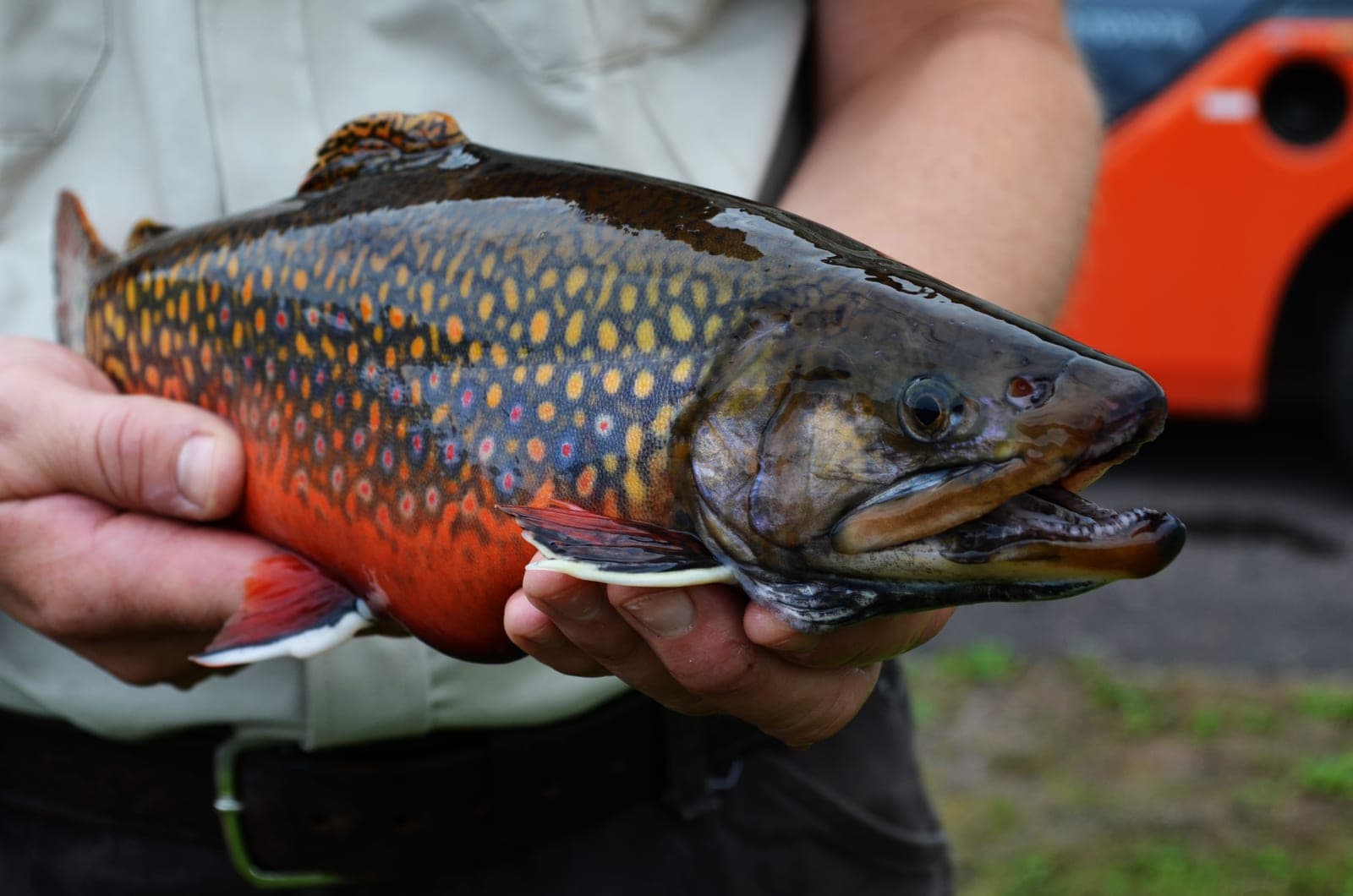
A brook trout is a char, not a true trout, and its colors say so: light wormlike markings on a dark green back, light spots and red spots ringed with blue on the sides, a square tail, and lower fins with a white leading edge backed by a black line. In fall the belly of a male turns orange. Nothing in a northern stream is as colorful, and nothing else has the white-edged fins.

Where it lives

Brook trout are the native trout of eastern North America, and in the Upper Midwest they live in the coldest water there is: the headwaters of northern streams, spring-fed creeks, beaver ponds, small lakes in the north and, as the coaster, the shorelines of Lake Superior. They need water that stays under about 65 degrees and will leave or die where it warms. In a stream they hold in pocket water behind rocks, under banks and in the plunge pools below riffles.

Through the year

Spring opens with the fish in the deeper pools and the water cold; as it warms they spread through the riffles and feed on hatches and whatever drops in. Summer on a good brook trout stream is short casts to small water, often under alders, and the fishing is best early and on cloudy days. In fall the fish color up and spawn on gravel in the headwaters, and the states close most streams for it. Coasters along Lake Superior move into the river mouths in fall and are protected by special rules.

How guides fish for it

On foot, usually, with light gear: a short fly rod with a dry fly or a small nymph, or an ultralight spinning rod with a small spinner or a worm where the rules allow bait. A brook trout guide knows which streams are cold enough this summer, how to move up a creek without spooking the pools, and where the few larger fish live. On Lake Superior it is casting or trolling along the shore for coasters, in a boat, in weather. Brook trout trips are often the quietest on this list and the most about the place.

Handling and release

Brook trout are small, fragile and mostly released. Wet hands, a quick unhooking in the water, barbless hooks. Where a stream has many small fish, keeping a few for breakfast is traditional and the rules often allow it; coasters are released.

Rules

Trout stream rules differ by stream and by state, and the Lake Superior coaster rules are stricter than inland ones. The Wisconsin DNR and the Minnesota DNR publish them, and a guide will know the ones for the water you are on.

A male coaster brook trout in fall color
USFWS Midwest Region, Public domain

At a glance

Scientific name
Salvelinus fontinalis
Family
Salmon and trout
Also called
Brookie, Speckled trout, Speck, Coaster (the Lake Superior form)
Size
Stream fish mostly run 6 to 12 inches. A fish over 14 inches is a big one; Lake Superior coasters are larger.
Season
Stream seasons open in spring and close in fall, with early catch-and-release periods in some states. Lake Superior has its own.

Guides who fish for brook trout

No guide has listed brook trout yet. If you guide for them, set up your service, add your waters and tick the fish.

Set up your service

Other fish with a guide

Every fish

How a trip gets booked

Pick your days

Specific days, a whole month, or any time. The day isn’t reserved yet.

The guide answers

They confirm a day, or tell you straight that it won’t work.

You’re booked

Nothing is charged until they confirm. Then your trip page has where to meet, when to be there and what to bring.