← Every fish

0 guides · 0 waters

Bluegill and sunfish fishing guides

The fish most people caught first. Bluegill and their sunfish cousins live in every warm, weedy lake in the region, bite all day on a worm or a small jig, and make a trip for a family or a first-timer that puts fish in the boat.

About bluegill and sunfish

Bluegill and sunfish

Lepomis macrochirus and others in the genus Lepomis

How to know it

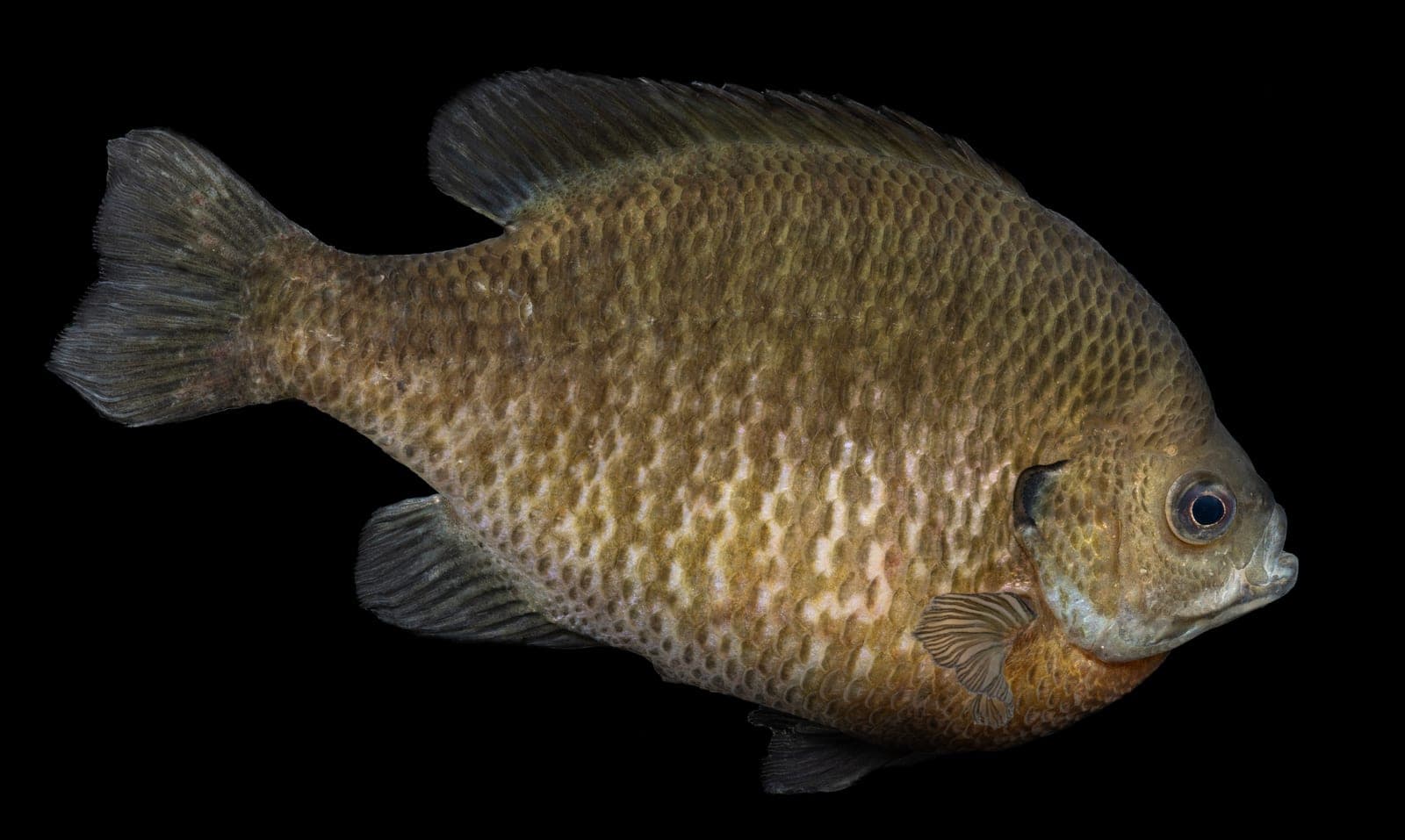
A bluegill is a deep, round, hand-sized fish with a small mouth, a dark spot at the back of the soft dorsal fin and a solid dark flap on the gill cover — the ear. Breeding males are orange on the breast and dark purple on the back. The pumpkinseed, found in the same water, has a red spot on the edge of its ear flap, wavy blue lines on the cheek and an orange-spotted body. Green sunfish have a bigger mouth and a bluer face. Hybrids are common and can carry any mix of these marks. "Panfish" means all of them, and crappie and perch too.

Where it lives

Nearly every lake, pond, flowage and slow river in the Upper Midwest holds bluegill, and most hold pumpkinseed with them. They live around weeds, docks, pads and wood in shallow to moderate water, feeding on insects, larvae and small crustaceans. Big bluegill, the ones over nine inches, live in lakes with a lot of weed cover and not too many small ones, and they are more wary than their size suggests.

Through the year

Late spring, when the shallows warm into the upper sixties, is the spawn: the males fan saucer-shaped nests in colonies on sand and gravel in a few feet of water, and for a couple of weeks they are visible, close together and easy to catch. After the spawn the larger fish move to deeper weed edges and the drop-off, where they stay through summer, feeding at the surface on calm evenings when insects hatch. In fall they school tighter on the deep weeds, and under the ice they are a staple of the winter, caught on tiny jigs over the same edges and basins.

How guides fish for it

Simply. A small hook with a piece of crawler, a waxworm or a leech under a bobber; a small jig cast and retrieved slowly; a fly rod with a popper or a small nymph on a summer evening. A guide's work is in the water and the depth: finding the beds in spring, the weed edge the big ones use in summer, and keeping a boat full of beginners baited and untangled. Many bluegill trips are family trips, and a good guide runs them so a child catches a fish in the first half hour. Through the ice it is a flasher, a light rod and a jig tipped with a waxworm or a plastic.

Handling and release

A bluegill's dorsal spines are sharp; it is held by smoothing the fin back with the palm. Most are kept. On lakes with big bluegill, releasing the largest ones is what keeps the lake worth fishing, because the big males are the ones that spawn.

Rules

Bag limits vary by state, and some lakes have reduced limits to protect large bluegill. The Minnesota DNR and the Wisconsin DNR publish the current rules, and a guide will know the ones for the water you are on.

A bluegill, side on, with the dark ear flap
USFWS Mountain-Prairie Region, Public domain

At a glance

Scientific name
Lepomis macrochirus and others in the genus Lepomis
Family
Sunfish
Also called
Bream, Sunny, Gill, Pumpkinseed, Panfish
Size
Most run 6 to 9 inches. A bluegill over 10 inches is a big one, and a plate of them is a good day.
Season
Open year round. The late-spring spawn is the easiest fishing of the year; they are caught all summer and through the ice.

Guides who fish for bluegill and sunfish

No guide has listed bluegill and sunfish yet. If you guide for them, set up your service, add your waters and tick the fish.

Set up your service

Other fish with a guide

Every fish

How a trip gets booked

Pick your days

Specific days, a whole month, or any time. The day isn’t reserved yet.

The guide answers

They confirm a day, or tell you straight that it won’t work.

You’re booked

Nothing is charged until they confirm. Then your trip page has where to meet, when to be there and what to bring.